Learn to Paint in 1 Week
“Great things are done by a series of small things brought together.” — Vincent van Gogh
In this streamlined intensive, we've distilled the most important concepts of realism from European art academies, making professional techniques both simple and accessible. Depending on your individual goals and skill level, we'll focus on the fundamentals of drawing and painting to help you create a portfolio-ready painting.
Here's how we do it:
Teaching Methods
Our week-long immersive courses are structured in two phases:
The Foundation (Days 1–3)
Through structured practice, you will develop fundamental understanding of Proportion, Value, and Color, essential skills for drawing and painting.
The Application (Days 4–7)
Once grasping these rules, we move into individualized projects with 1-on-1 coaching to help you build a professional portfolio piece.
Daily Program
Each day is structured to provide enough support so that you'll be able to follow along with a demo ("I do"), practice with guided exercises ("We do"), and apply the techniques yourself ("You do").
Mornings (10AM - 1PM)
Group Lecture, Demos, & Guided Exercises
Afternoons (2PM - 5PM)
Individual Studio Practice & Personalized Feedback
Evenings
Reflect, Relax, & Reconnect - Or Keep Working on Your Painting!
01. Drawing Skills & Proportion Techniques
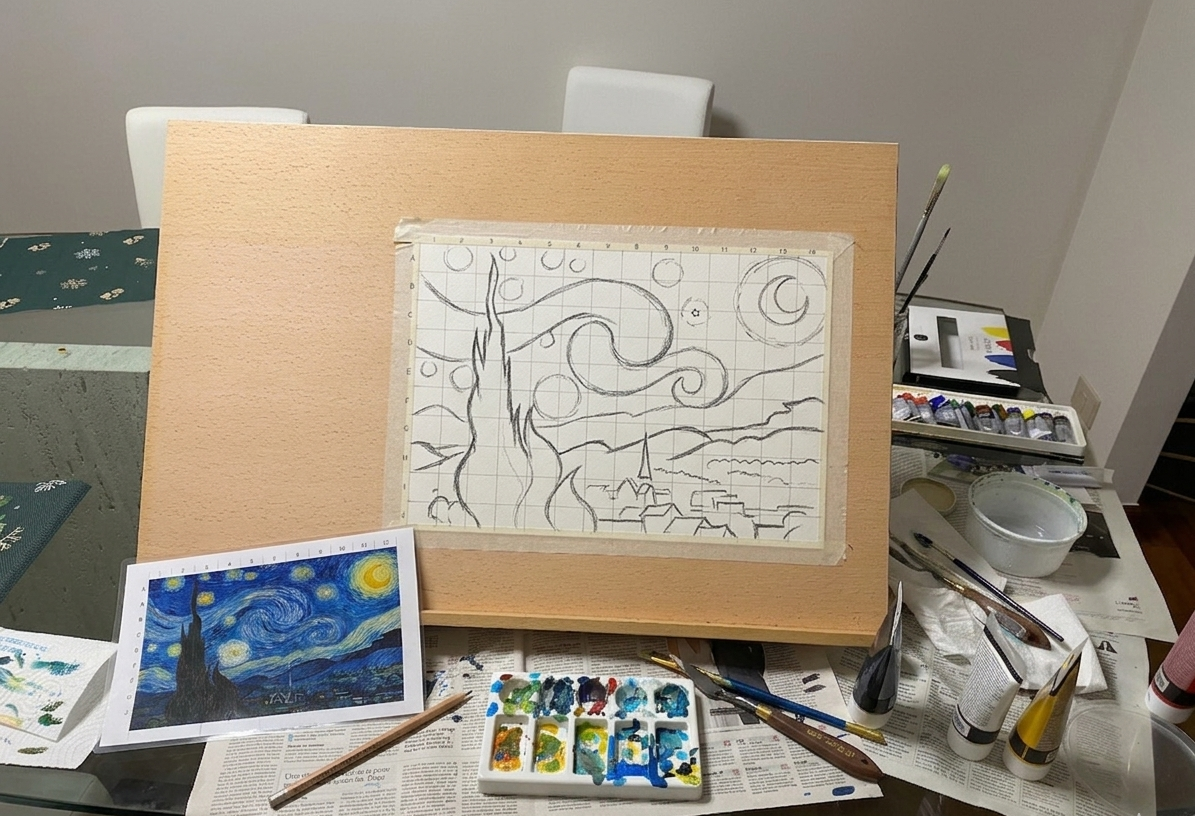
Grid Method
It's not cheating to use a ruler! The grid method is the easiest way to map the proportions of your reference onto your canva to create a perfect drawing.
An example of the grid method I used to ensure that my reproduction of Vincent Van Gogh's "Starry Night" was pixel perfect.
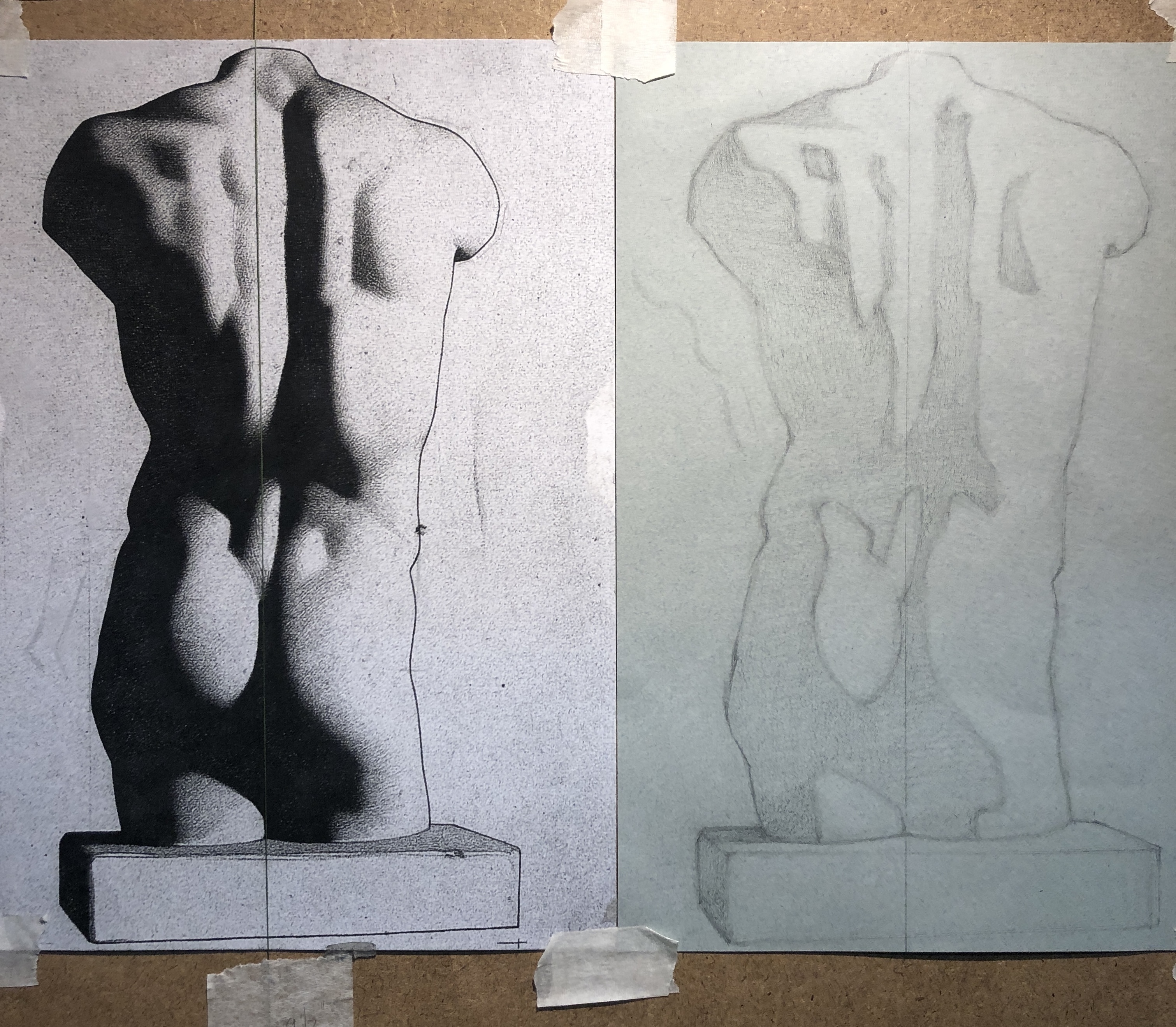
Sight-Size Drawing
Learn the traditional method of drawing where the subject and the drawing are viewed from the same distance at a 1:1 scale, ensuring absolute accuracy.
Work In Progress (Example) - A Barque pencil drawing of exact size with the reference
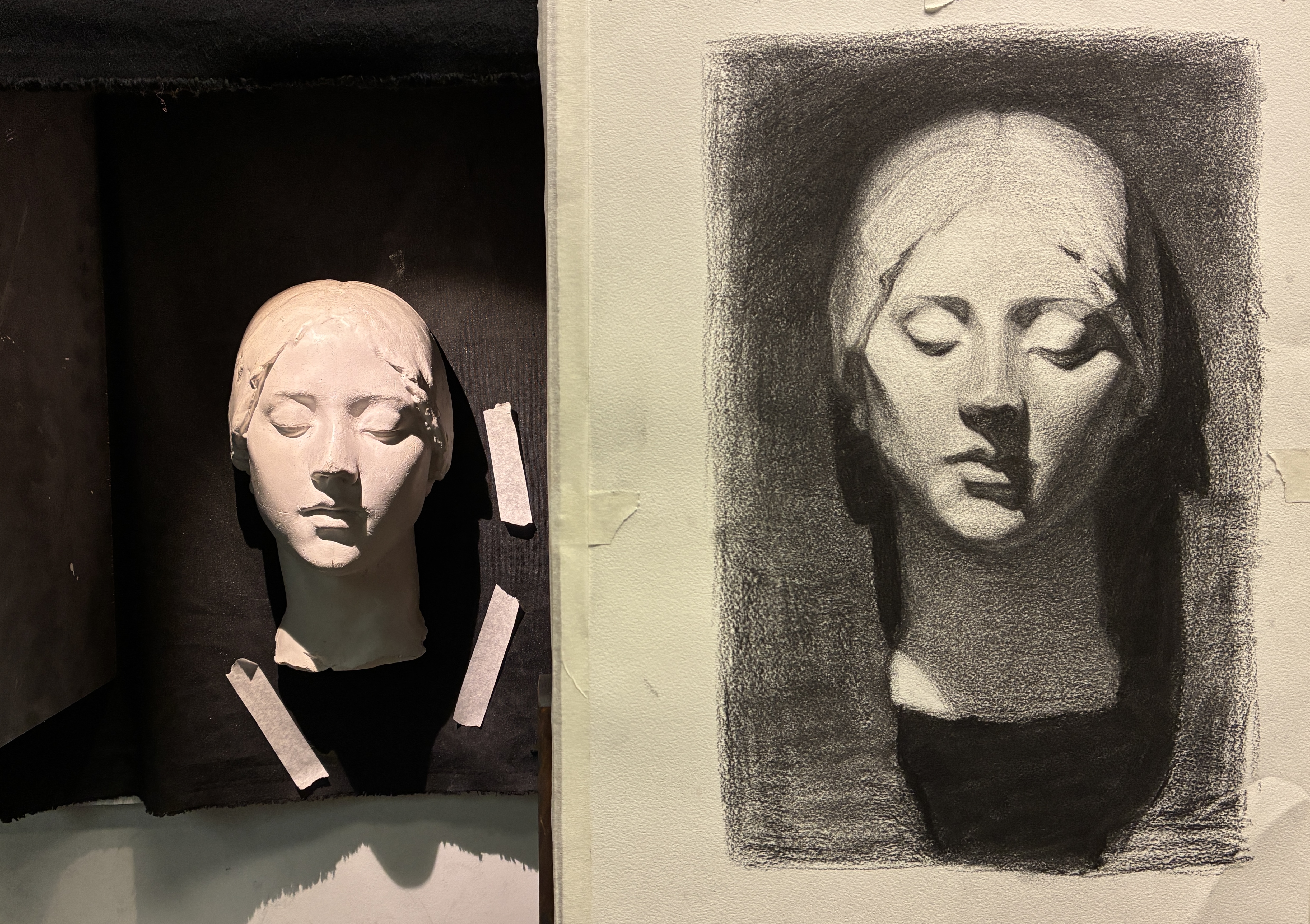
Comparative Drawing
Develop your eye to measure proportions relatively, allowing you to draw from any distance and at any scale.
Work In Progress (Example) - A charcoal cast drawing in which the reference is about 14 inches away from the drawing board.
02. Value Skills & Form Techniques
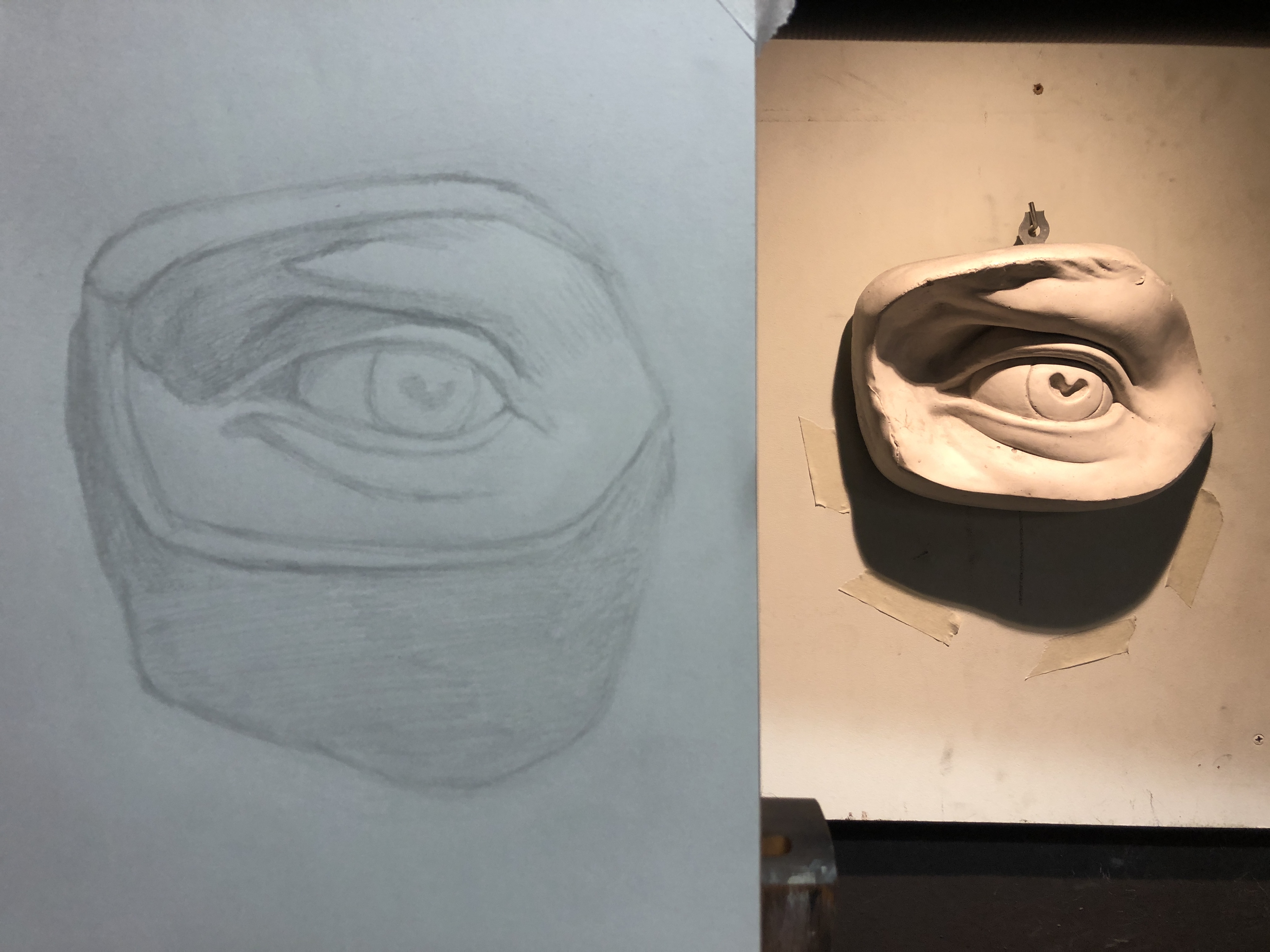
Shape Identification
Master the art of breaking down complex shadow shapes into straight lines and geometric shapes, ensuring correct angle and inclination of lines.
Work In Progress (Example) - A pencil cast drawing during the shadow block in phase.
Value Study
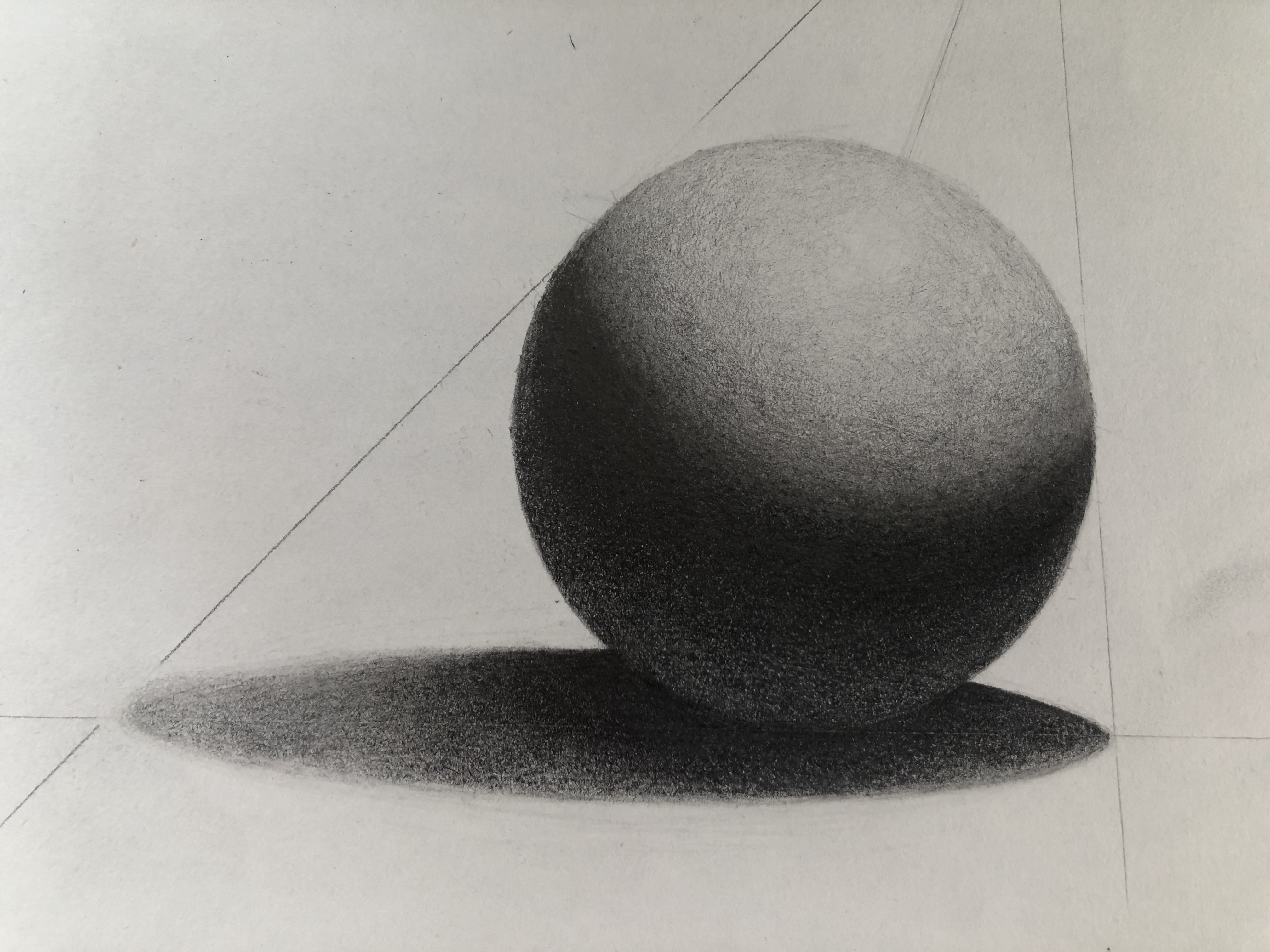
Identify different parts of light and shadow on an object such as the core shadow, cast shadow, occlusion shadow, etc.
This is an example of a value study of a sphere, with clear seperation of light and dark, transition in the midtone area, and gradual changes in the lightest part of the object.
Edge Quality
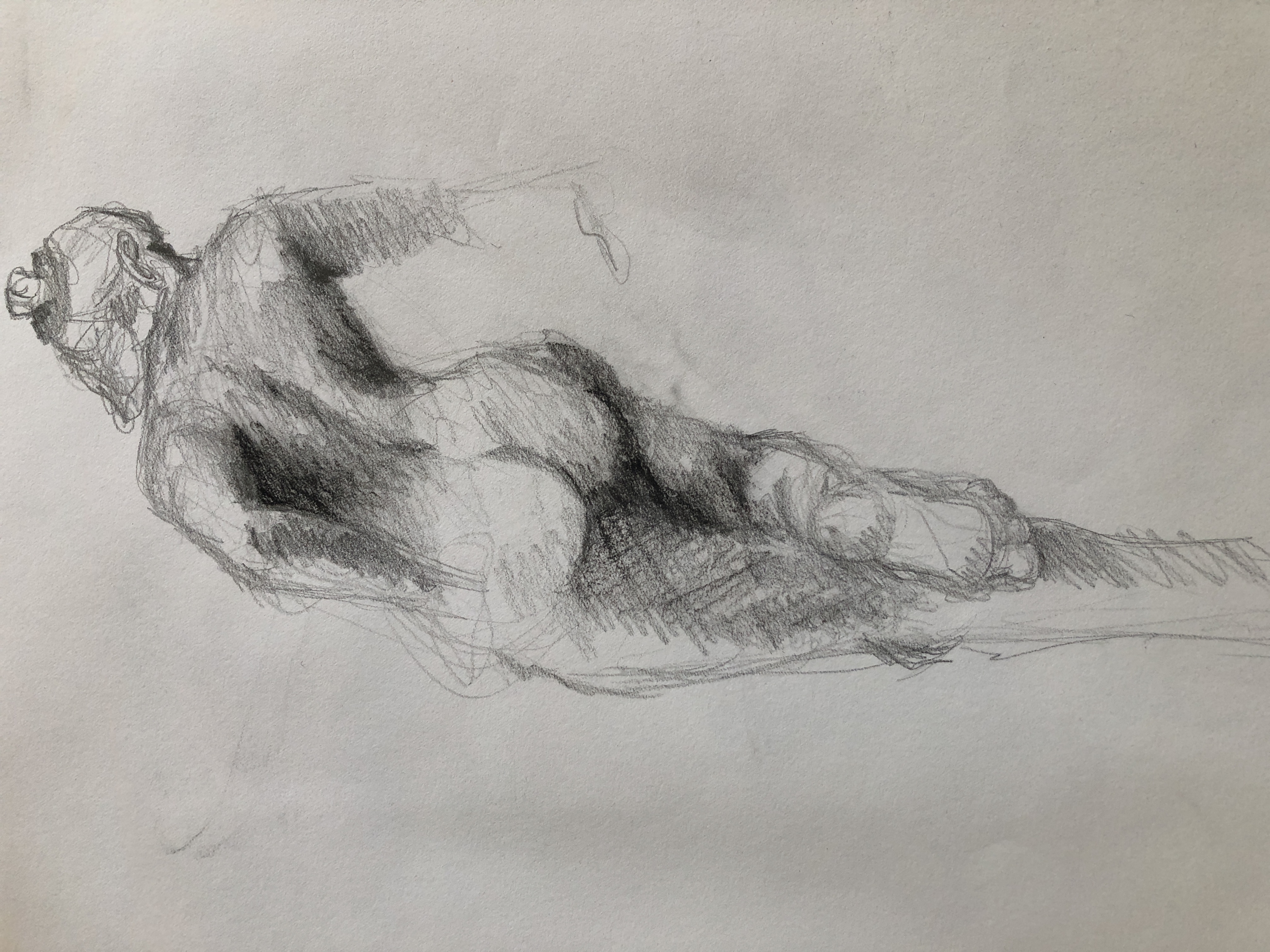
Learn to manipulate lost and found edges to guide the viewer's eye and create a sense of three-dimensional space and atmosphere.
This is an example from figure drawing, where it's most easy to see this example with gesture, but we will also see examples of this from different paintings in the course.
03. Color Skills & Painting Techniques
Color Identification & Selection
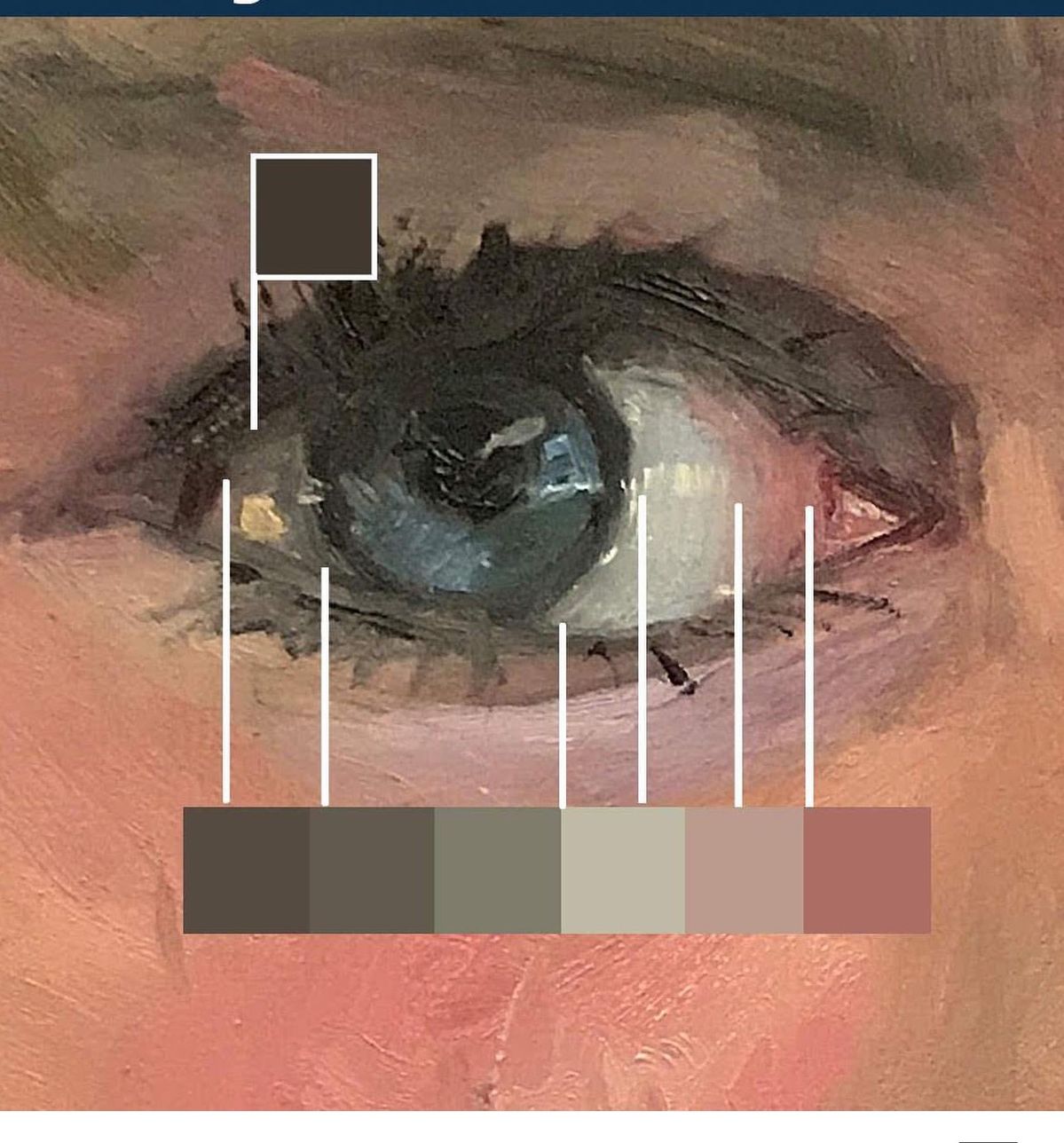
Did you know that color is relative? That you can find blues, greens, and all sorts of crazy colors in skin tones? Your eye can fool you... That's why we use techniques like viewfinders and digital tools like eyedroppers to identify the actual colors in a reference image or real life.
Referene Example - A variety of warm and cool tones in this eye
Color Mixing
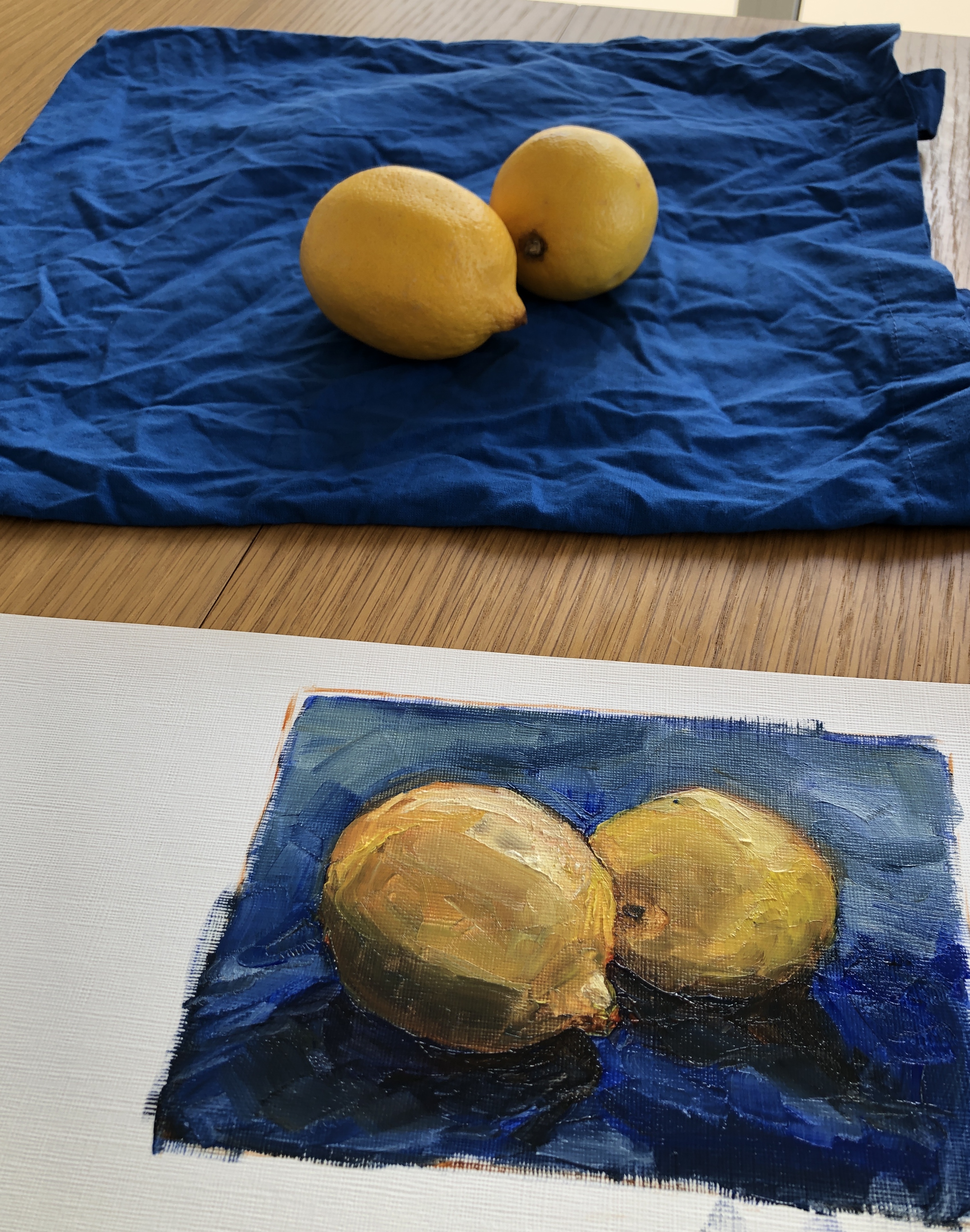
Understand how to mix colors and how understand how light affects color. Learn to shift hues logically to create realistic lighting effects and vibrant shadows.
In this Still Life example I painted, I played with the cool reflected light from the fabric with the warm satured shadow tones of the lemon.
Color Palettes
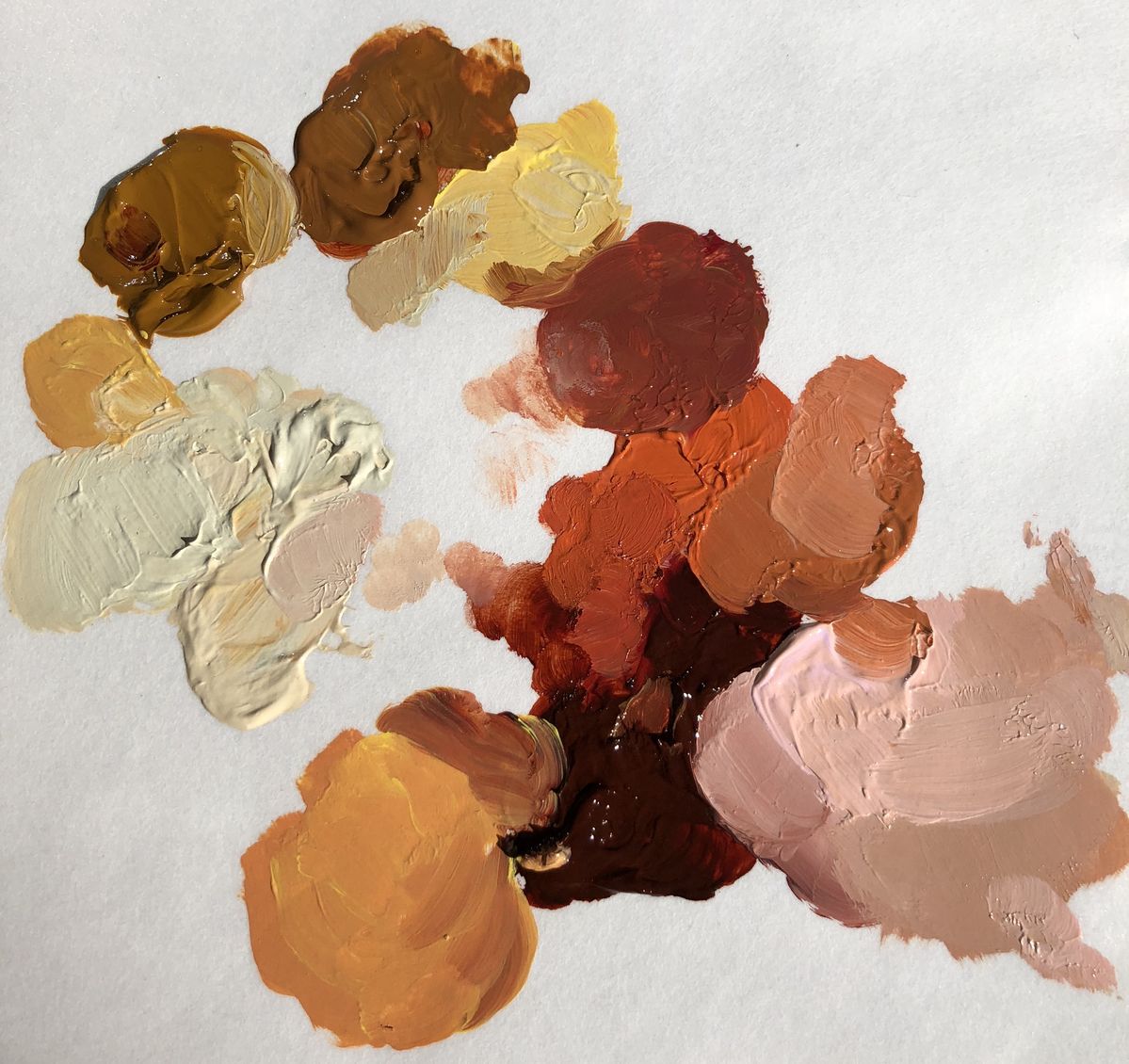
Starting with a limited palette helps you understand how to mix colors and achieve paintings with cohesive range of color.
Referene Example - We will practice using the Zorn Palette to create realistic skin tones for portraits.
Learn More About Our Curriculum
Book a free 30 minute call to learn more about the art techniques you can apply to your work this summer. Let's take you to the next level.